
Our Sustainable Energy Strategy
Skanda Vale Ashram sits in 300 acres of forest and meadow in rural West Wales. For over fifty years, we’ve been dedicated to serving life. This strategy sets out how we’re making that possible through renewable energy and sustainable land management, while reducing our environmental impact as far as we can.
Our Path to Self-Sufficiency
A few years ago, generating all our own power felt like a distant ambition. Today, it’s close to reality. With the commissioning of our 100kW wind turbine in 2026, Skanda Vale now generates nearly twice the electricity it consumes. Between the turbine and our solar panels, we produce around 300,000 kWh a year—enough to supply approximately 80 households, from a community equivalent to around 30 or 40.
In a rural area like ours, grid outages during storms can last for days—over a week, in one recent case. Self-sufficiency isn’t just an environmental ambition; it’s about being able to look after all the life in our care, whatever happens. Our founder, Guru Sri Subramanium, was passionate about this for exactly that reason.
Electricity
Electricity used to be one of our biggest costs. When prices roughly doubled between 2021 and 2022, it gave us the push to invest seriously in onsite generation.
Solar Panels
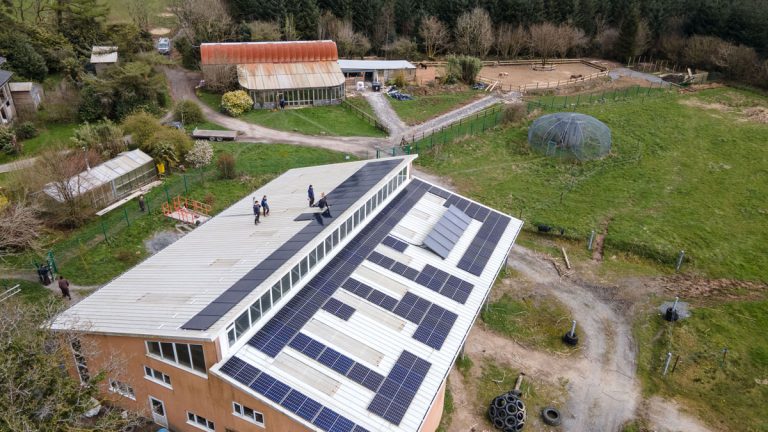
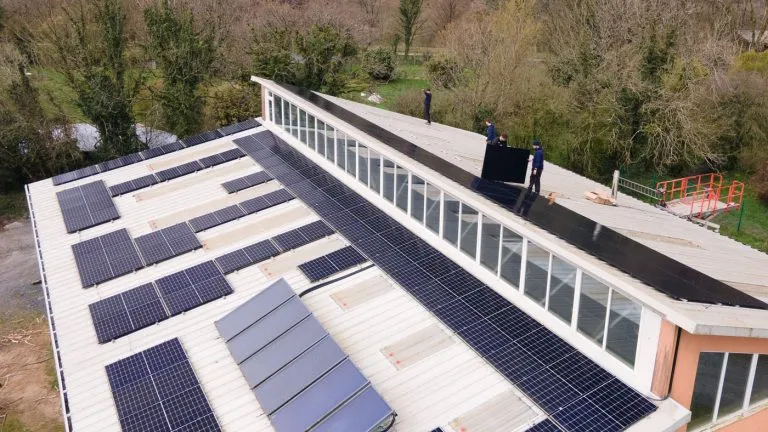
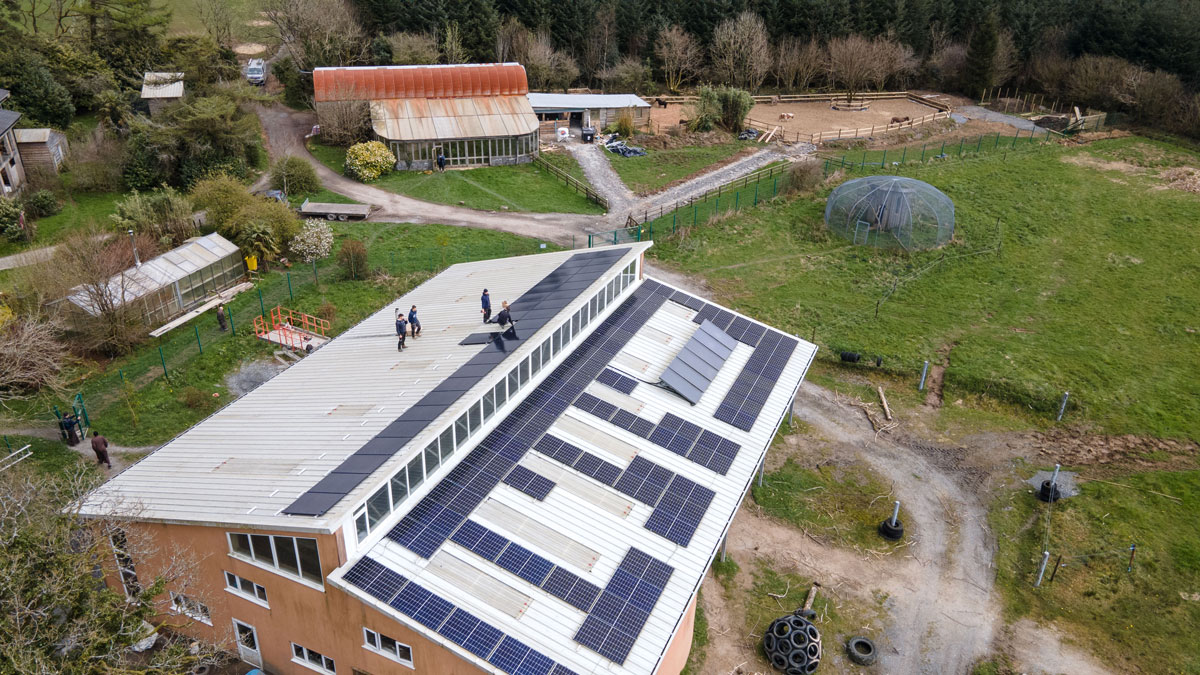
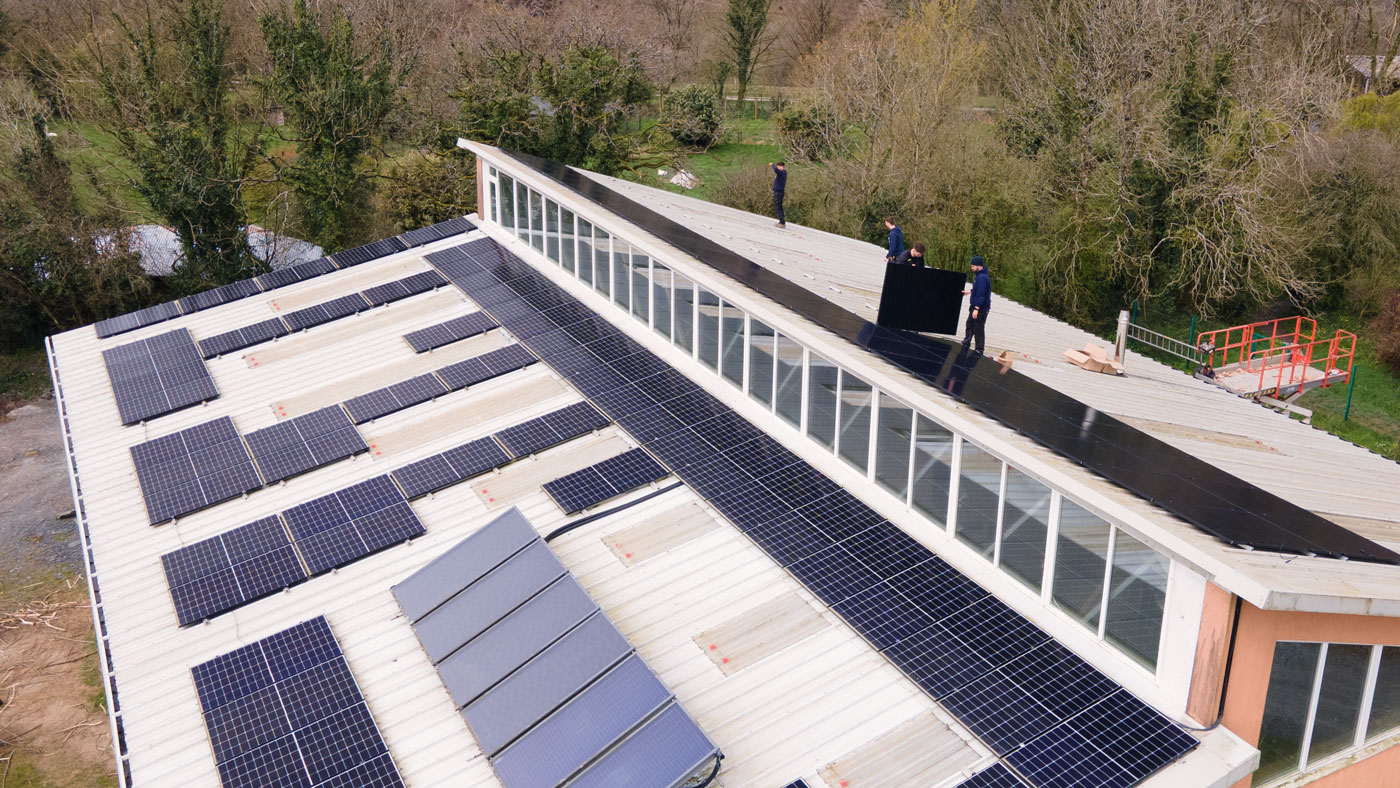
We started with solar panels on the elephant house roof, installed in 2022 and 2024, generating 44,000 kWh a year. Two large cables connecting our hilltop and valley sites allow this renewable energy to reach every building in the ashram.
Wind Turbine
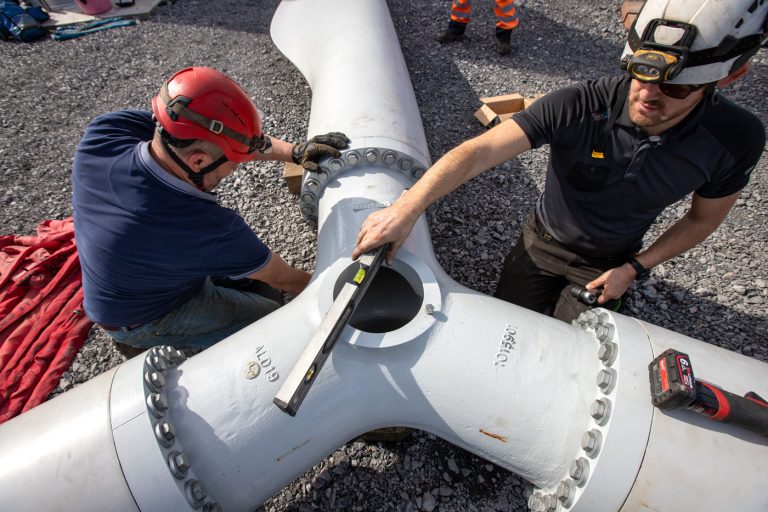
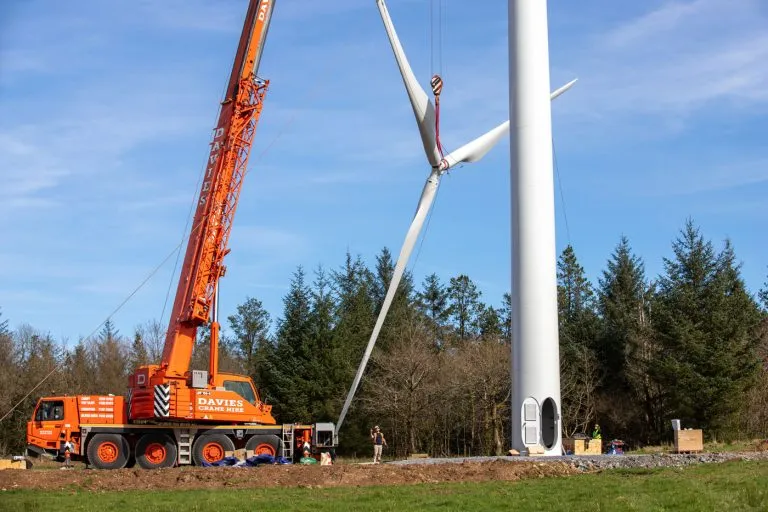
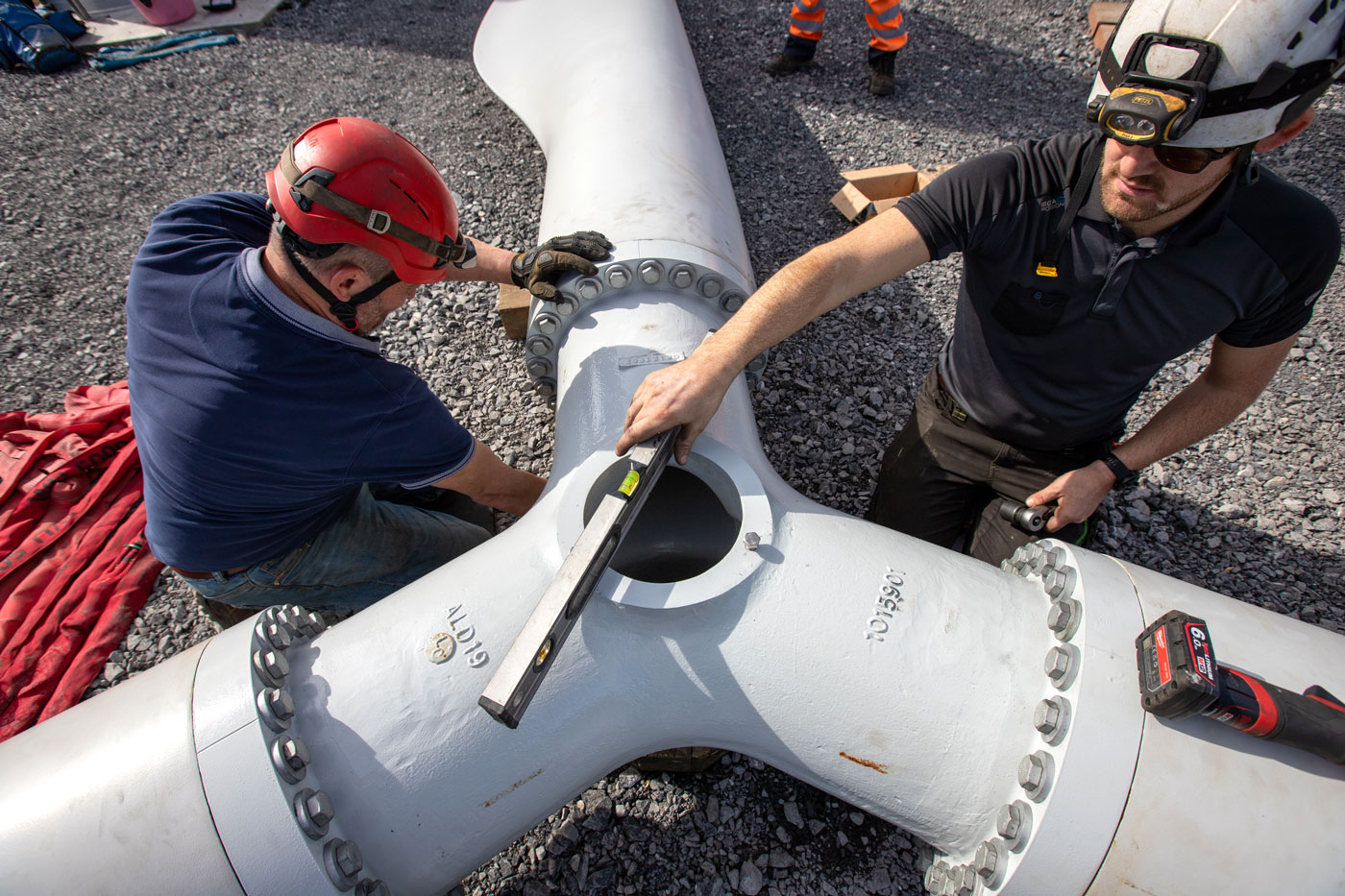
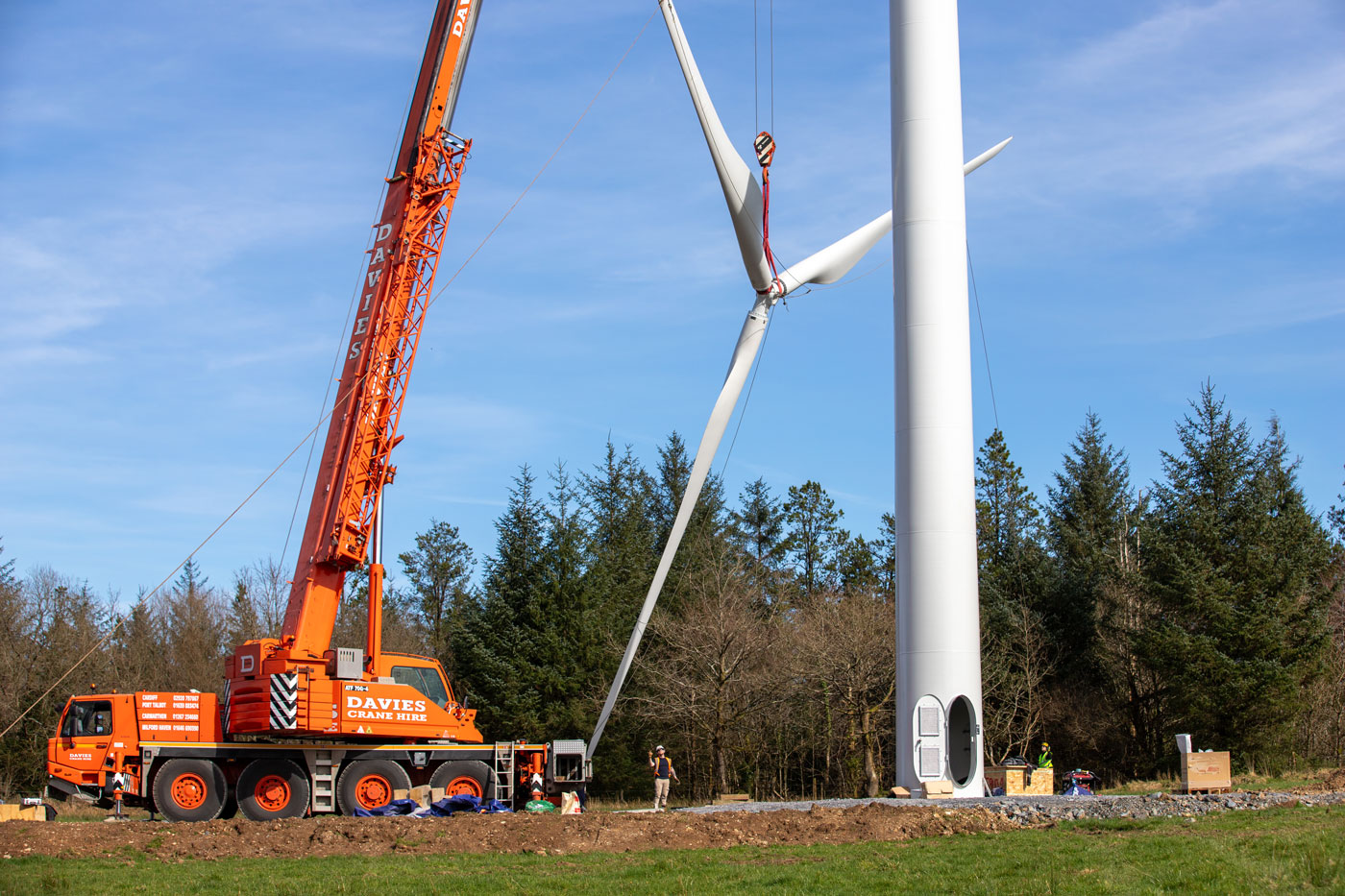
Then came the big one. Our 100kW wind turbine, commissioned in March 2026, produces around 260,000 kWh a year. Combined with the solar panels, we now generate far more than we use—making Skanda Vale a net exporter of renewable energy.
Both our grid supply and surplus export are handled by 100Green, a dedicated supplier of 100% renewable electricity and green gas. The turbine was part-funded by the Ynni Cymru SLES Capital Grant and should pay for itself within five to eight years. It has a minimum lifespan of 20 years, and likely 25 or more.
Energy Efficient Buildings
Energy Efficiency First
There’s no point generating renewable energy if it escapes through the walls. For the past 15 years, we’ve prioritised proper insulation and airtight construction across all our properties.
Retrofitting Older Buildings
Our older stone buildings—Craig Fryn volunteer accommodation, Skanda Vale Hospice, and the Sisters’ Lodge—have all been comprehensively retrofitted with high-quality insulation, new double-glazed windows, and airtight sealing.
New Construction Standards
All new buildings are designed to ultra-low energy standards, using 70–95% less energy than conventional construction. We source timber from our own land and use sustainable building materials wherever possible.
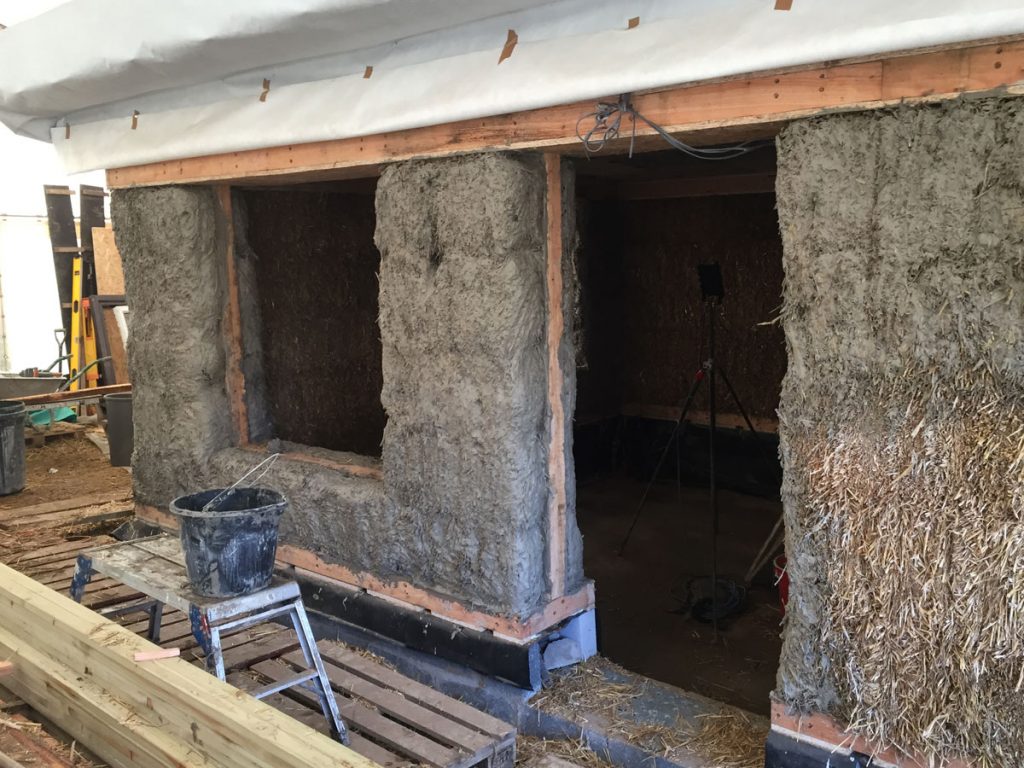
This building uses timber and clay render from our own land. The strawbales used in the walls are carbon neutral and are highly insulating to help reduce our heating energy use.
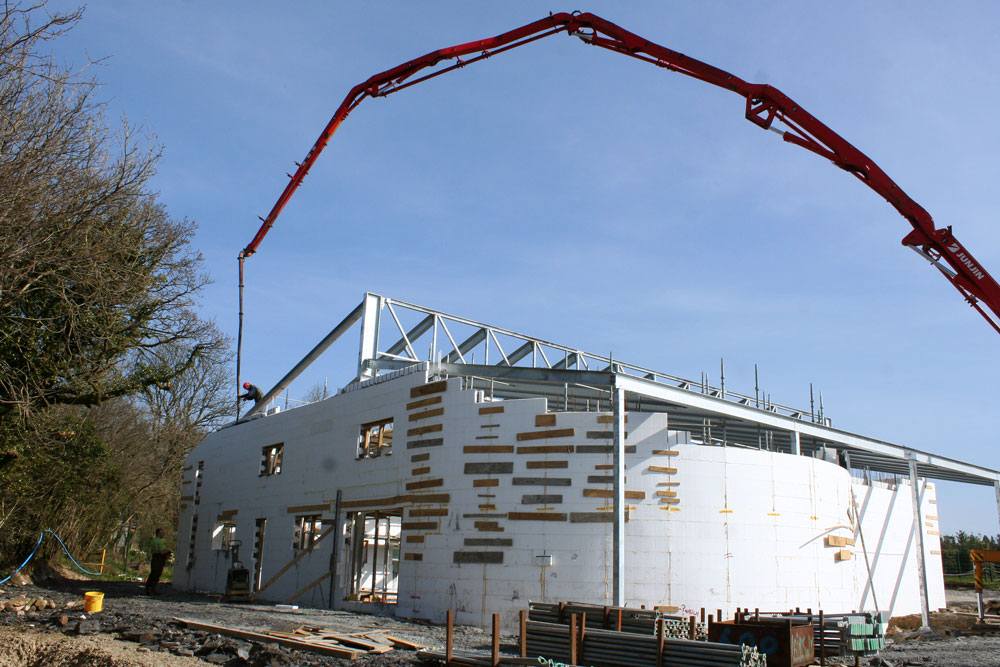
The elephant barn is built from polystyrene blocks filled with concrete – it was featured in Green Building Magazine as an example of a highly energy-efficient building project.
Heating
Wood & Renewable Heating
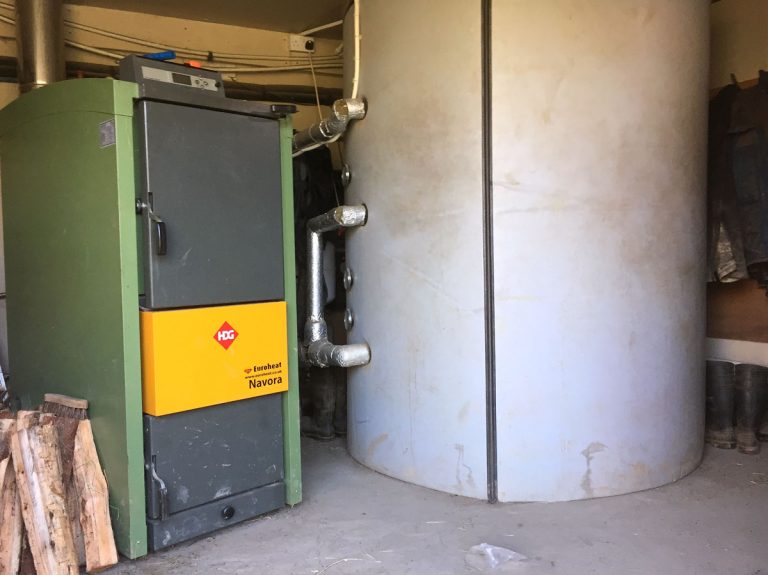
With over 130 acres of forest on our land, we have a carbon-neutral heating supply on our doorstep. Skanda Vale has used firewood and biomass for heating for many years, and our forests generate more than enough fuel to meet all our heating needs sustainably into the future.
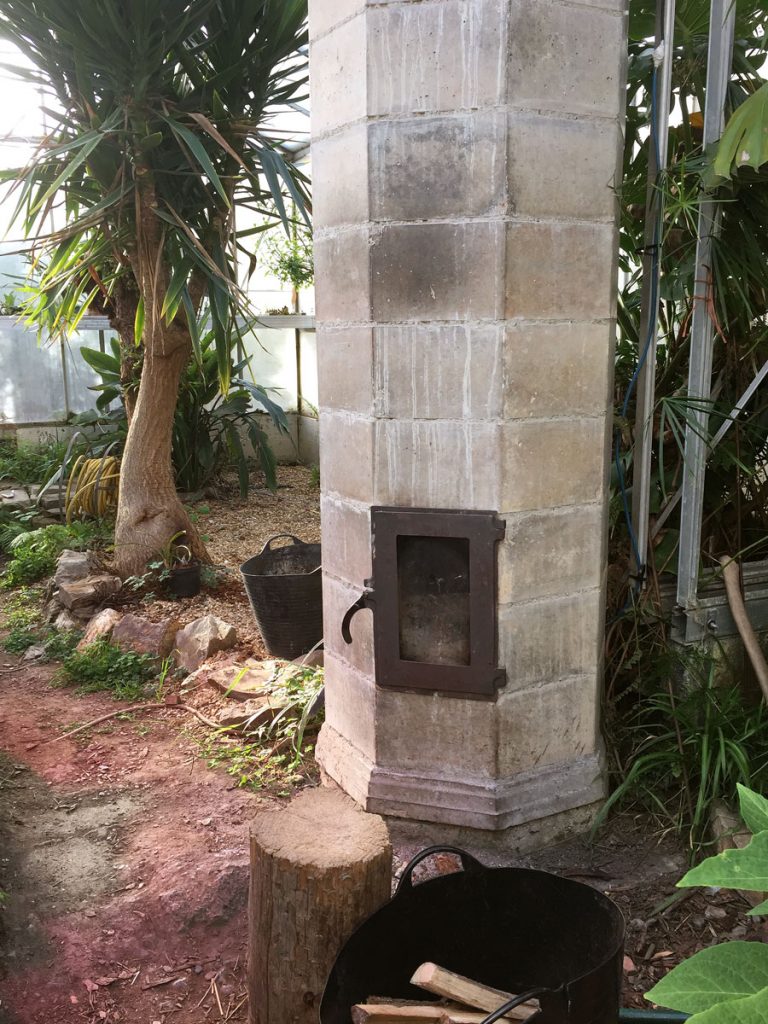
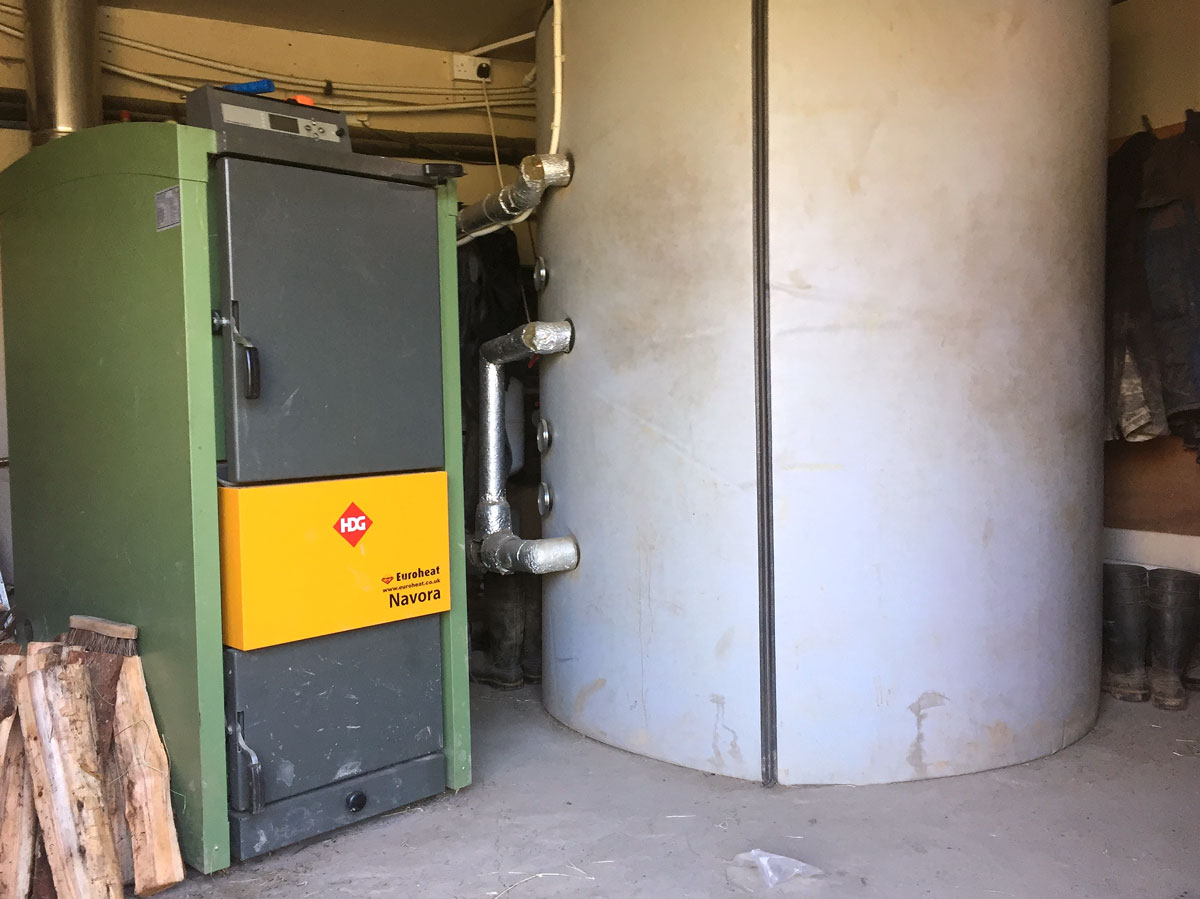
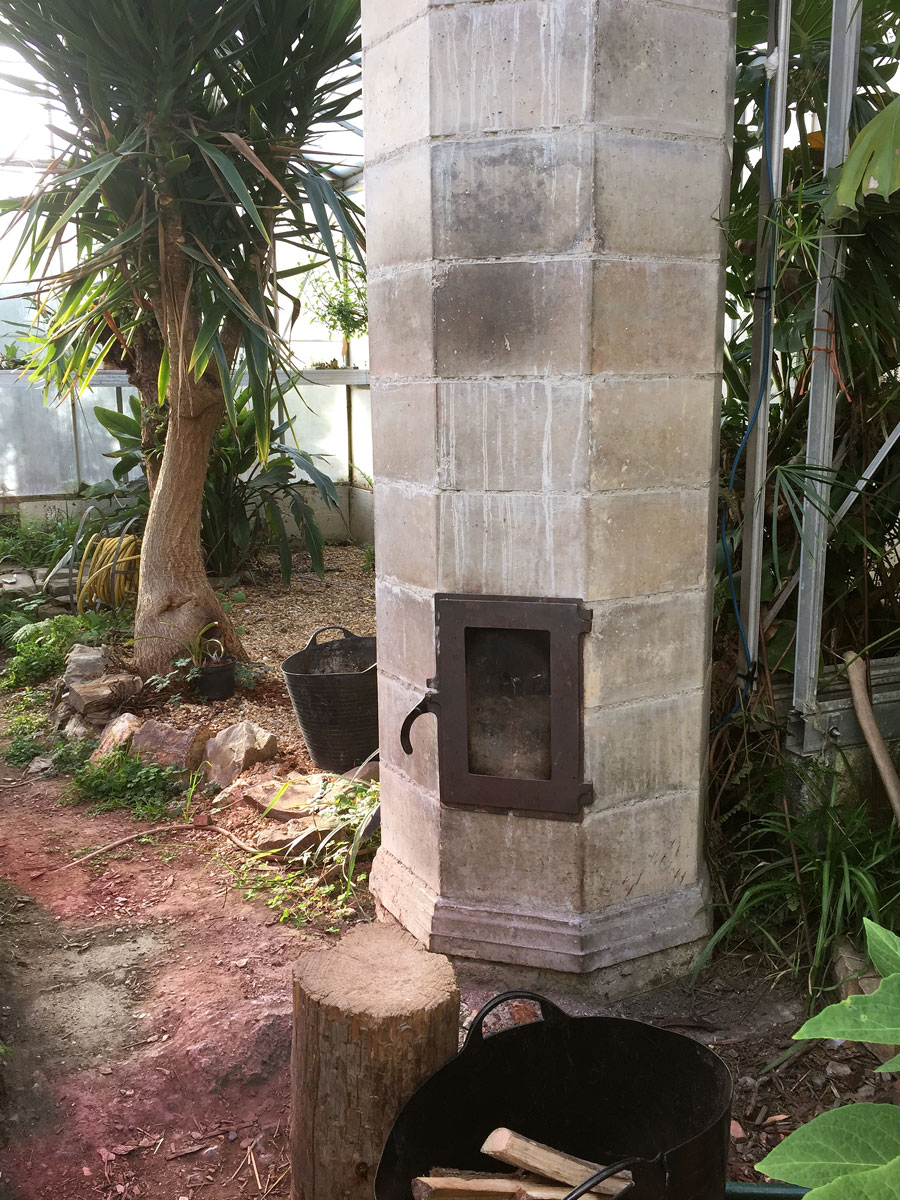
We use two types of biomass heating systems, depending on building size and usage. Automated wood chip boilers offer superior efficiency but require higher upfront investment, while simple wood stoves provide a cost-effective solution for smaller spaces.
Our larger buildings—including Skanda Vale Hospice, the elephant house, Craig Fryn volunteer accommodation, the pilgrim’s main toilet block, and the sister’s lodge—are equipped with sophisticated biomass boiler systems. Smaller buildings such as the dining room, reception, cafe, offices, greenhouses, and brother’s accommodation chalets use traditional wood stoves.
Solar & Ground Source Heating
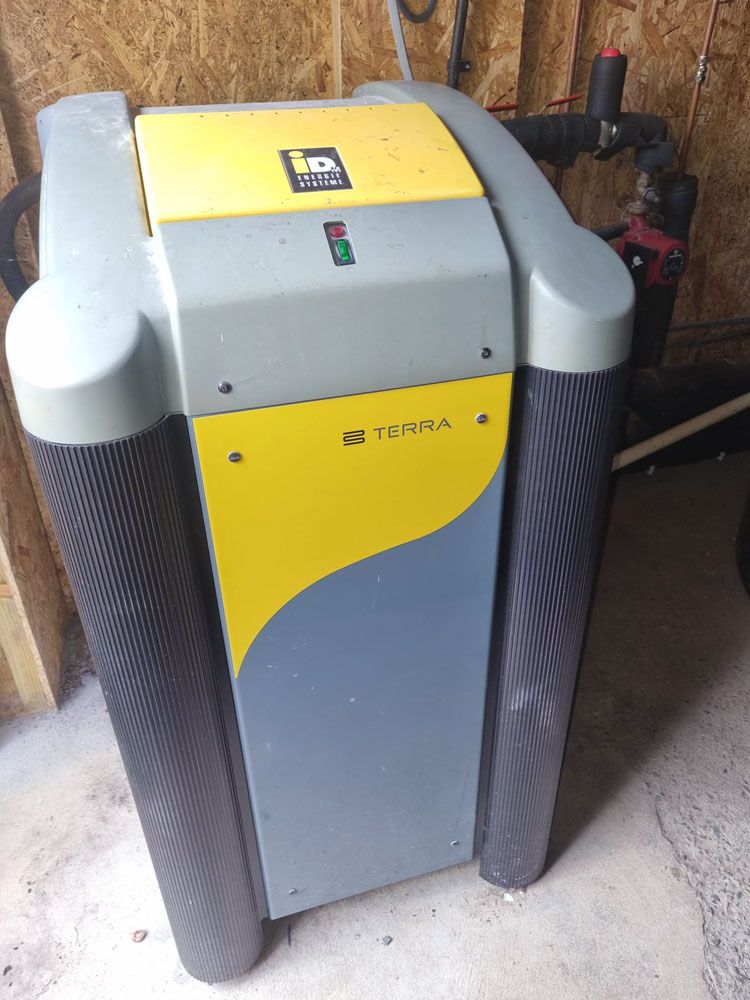
We’ve also invested in additional renewable heating technologies. Solar thermal panels installed on the elephant house, Sister’s Lodge, and Skanda Hafan provide domestic hot water. Skanda Hafan features a ground source heat pump that powers the underfloor heating system and preheats the domestic hot water.
Transport
New petrol and diesel car sales will be phased out in the UK by 2030, with hybrids permitted until 2035 and all new vehicles fully zero-emission from that date. We’re already well ahead of that curve.
Electric vehicles
Between Skanda Vale and Skanda Vale Hospice, we’ve already replaced our petrol and diesel vehicles with five fully electric cars, one van, and one minibus. We’ll transition the rest of the fleet as suitable options become available.
We’ve installed charging points for our own vehicles, powered by our onsite renewable generation.
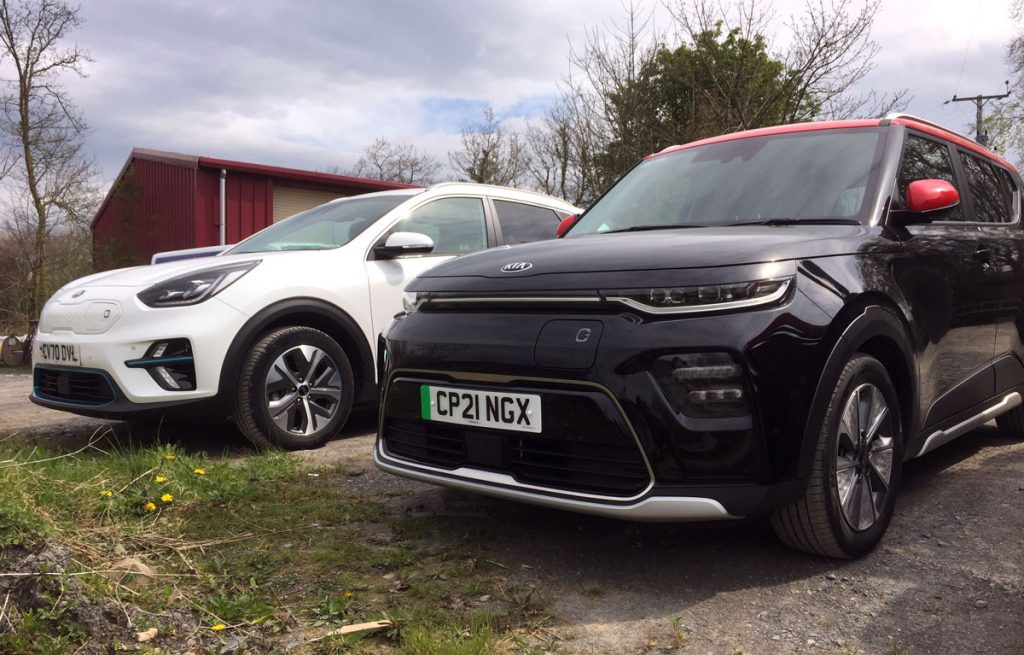
Electric cars belonging to Skanda Vale Hospice
Waste
Waste Reduction & Recycling
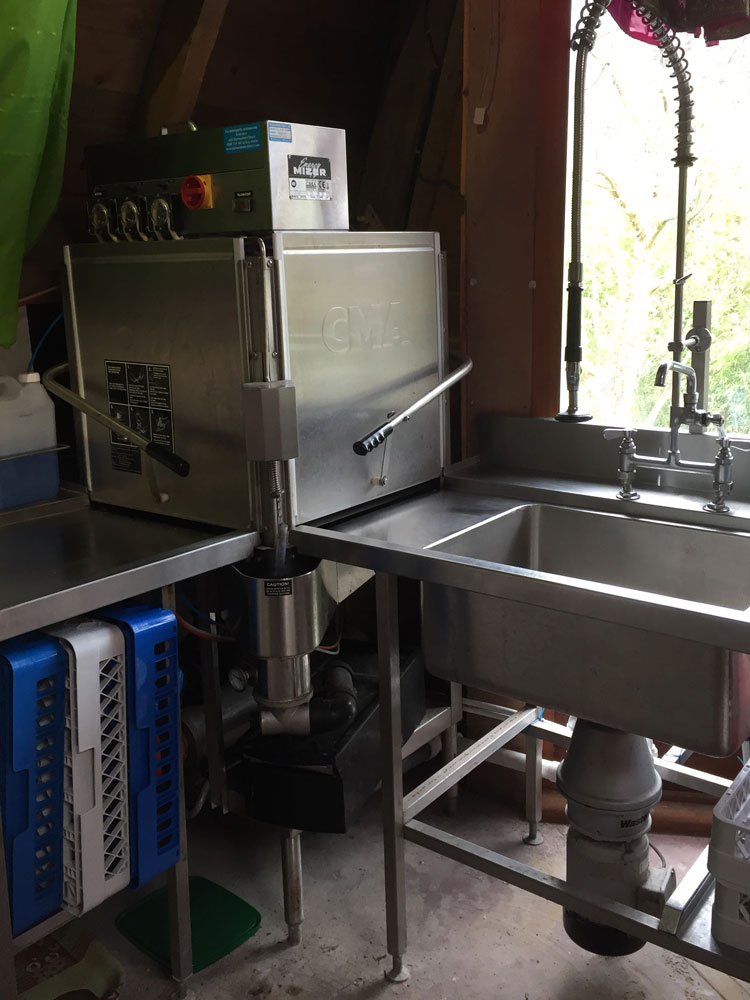
In 2020, we installed two industrial dishwashers and switched from disposable plates, cups, and cutlery to washable ones for our meal service. A simple change that has made a real difference to how much waste we send to landfill.
Composting & Material Recovery
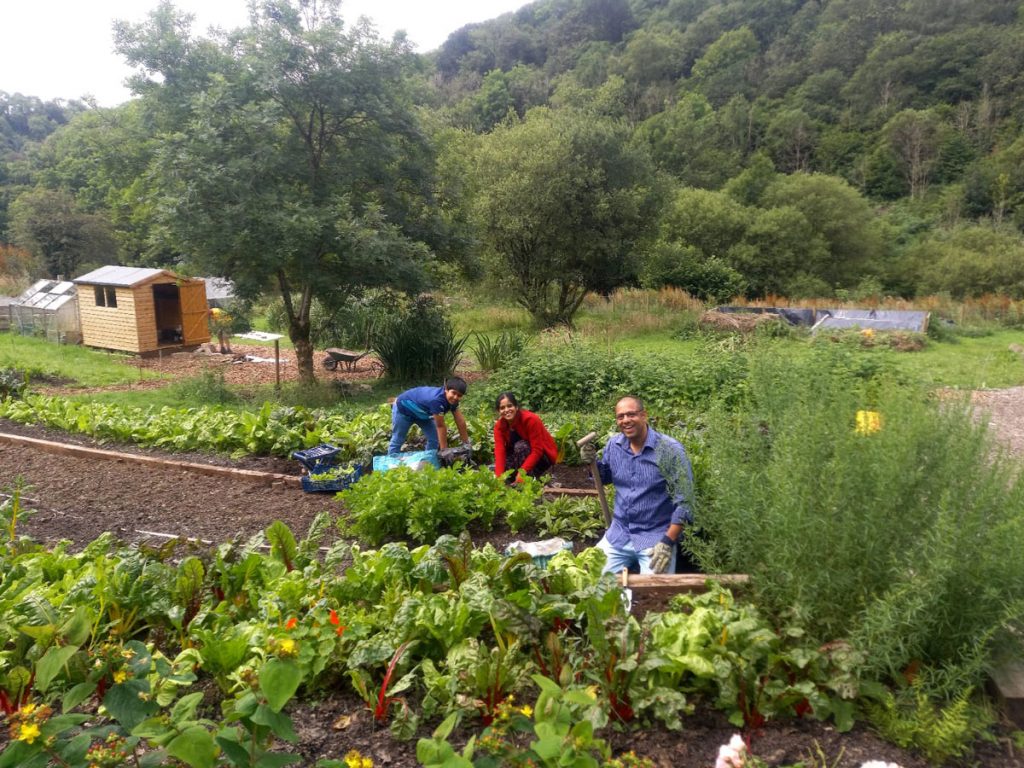
We compost all food and garden waste, using it to enrich our vegetable garden soil. Old untreated timber is converted into biomass fuel, while scrap metal and old appliances are recycled to minimise the amount of metal, glass, and plastic reaching landfill.
Visitor Education
Getting the large numbers of pilgrims who visit us to recycle is an ongoing challenge, but we’re making progress. New bins with clearer signage throughout the ashram are helping make recycling easier and more intuitive for visitors.
Sustainable Resource Production
Animal Feed
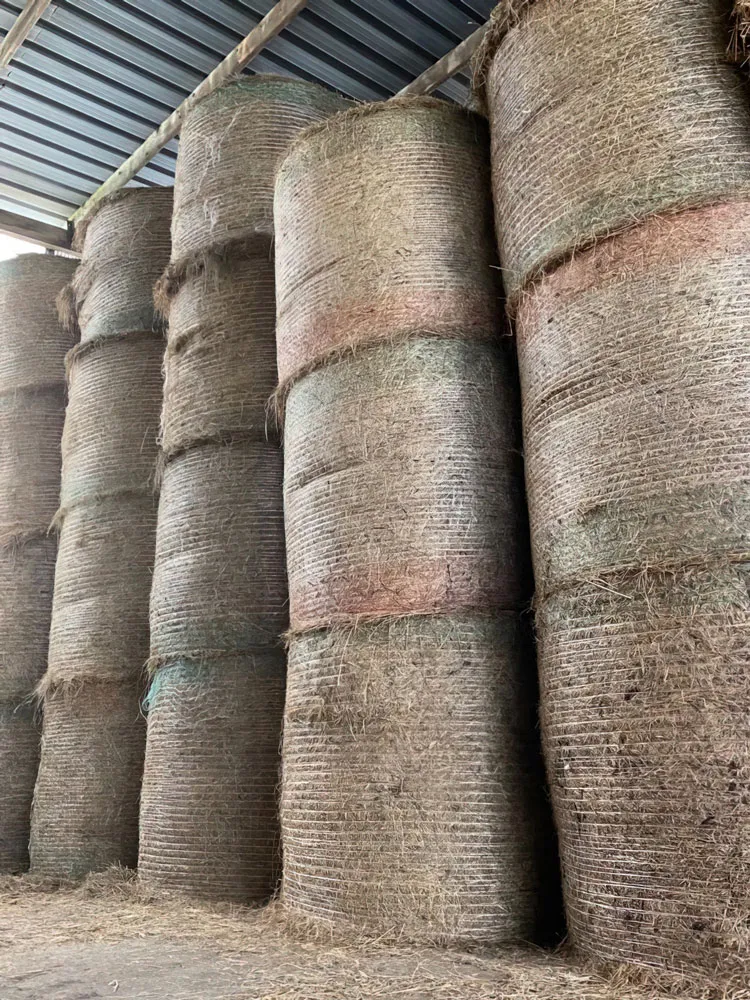
Each year we produce around 150 tonnes of high-quality organic meadow hay, covering 90–100% of the feed requirements for our cows, horses, and elephants. It’s a low-impact, self-sufficient approach that also saves us a significant amount of money.
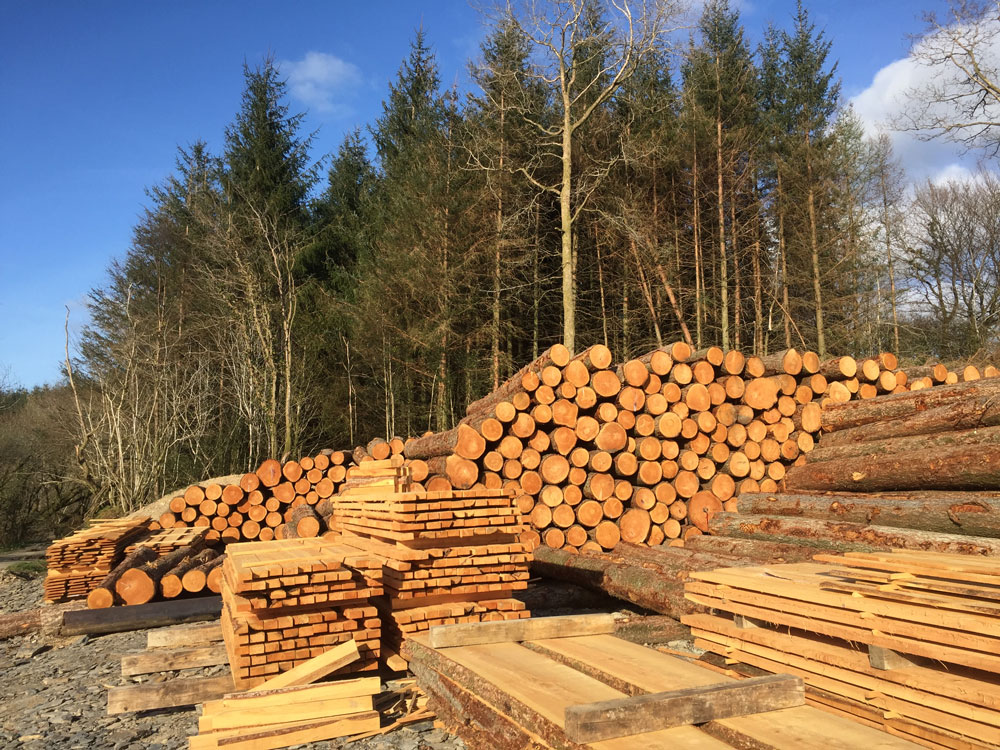
Timber Harvesting
In 2022, we harvested a mature section of larch forest, yielding 500 tonnes of high-quality timber—half for biomass heating fuel, half for construction projects around the ashram. Larch is exceptionally durable and needs no paint or chemical treatment, making it ideal for sustainable building.
Carbon Capture Through Land Management
The average UK resident produces around 5–10 tonnes of carbon emissions a year. Our 130 acres of forest can capture 260–1,040 tonnes of CO2 annually, and our 160 acres of flower-rich, organically managed meadows sequester a further 160–224 tonnes. The diversity of plant species and sustainable management practices in our meadows create ideal conditions for carbon storage.
Add in our renewable energy systems and the numbers become striking. Our solar panels save 8.5 tonnes of CO2 a year, and our wind turbine saves a further 76 tonnes by replacing grid electricity and significantly reducing our onsite LPG use.
Taken together, our land management and renewable energy offset an estimated 504–1,348 tonnes of CO2 a year—equivalent to the carbon footprint of 100–270 people. Even at the most conservative estimate, that is several times the emissions of our 25-person resident community, and the evidence suggests that Skanda Vale’s own operations are already carbon negative. Our land management also supports biodiversity and helps regulate the local climate.
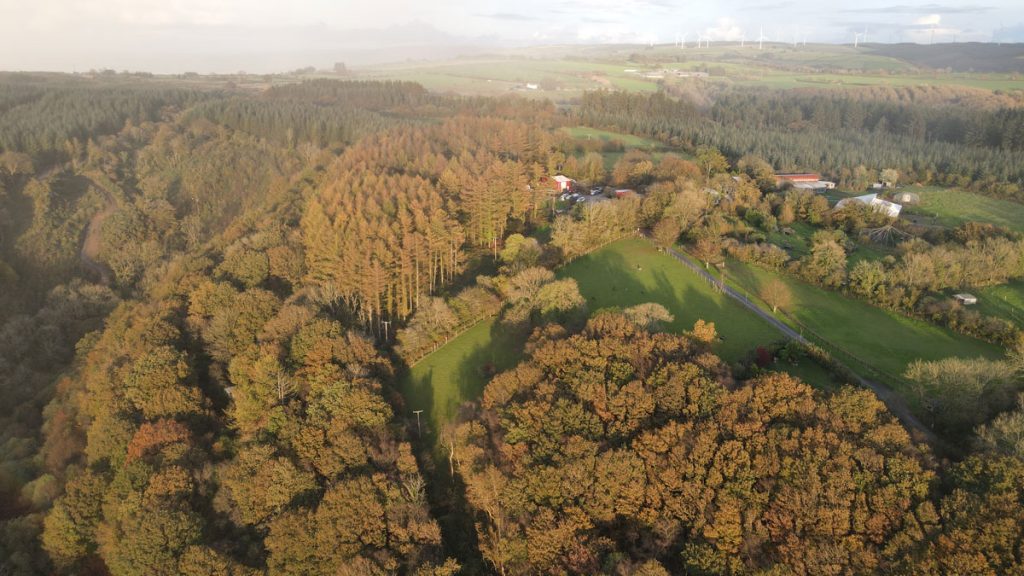
Skanda Vale is comprised of 300 acres of mixed woodland and pasture.
Forest Restoration & Sustainable Land Management
Native Forest Restoration
Since 2010, we’ve been gradually replacing our conifer plantations—primarily larch, western hemlock and spruce—with mixed native broadleaf species including oak, birch, field maple and willow. Native trees provide additional food and shelter for birds, insects, and mammals that evolved alongside them, creating far richer habitats than the plantations they replace.
Pilgrim Woodland Paths
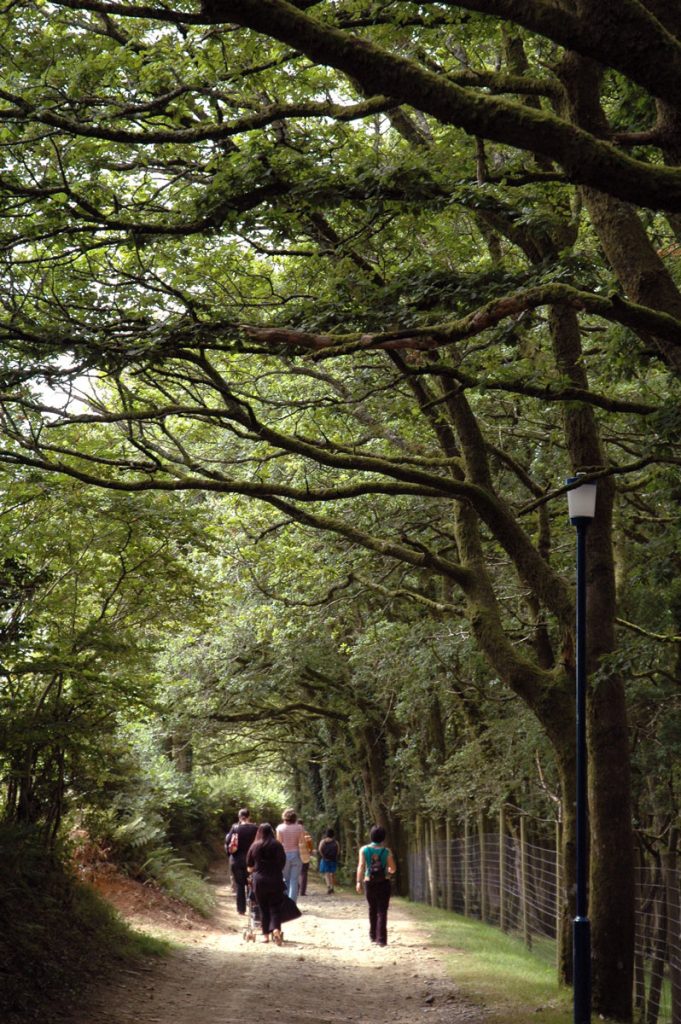
We’re developing new woodland paths so pilgrims can experience this restored environment first-hand. Native broadleaf woodlands, with their varied plant life and seasonal changes, offer a contemplative setting for those seeking connection with nature.
Chemical-Free Meadow Management
Our commitment to biodiversity extends well beyond the forests. We manage 160 acres of chemical-free meadow pasture—flower-rich grasslands that support wildlife right across the ashram and provide better nutrition for our animals than intensively managed land.
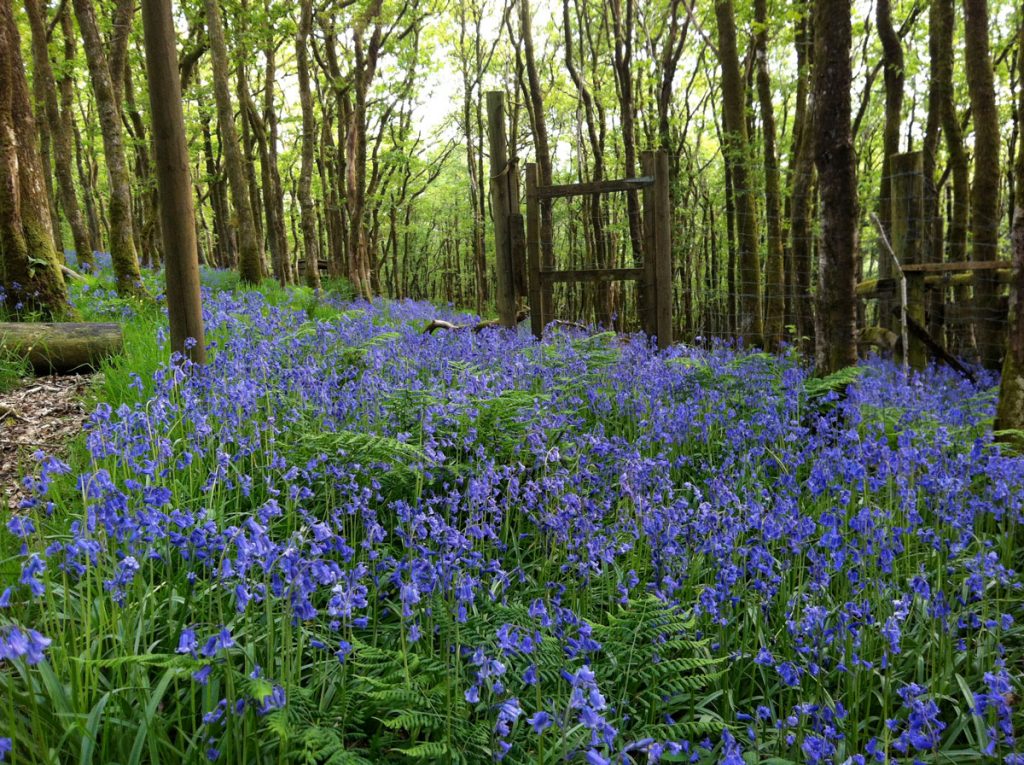
Ancient oak woodlands support a wide range of life
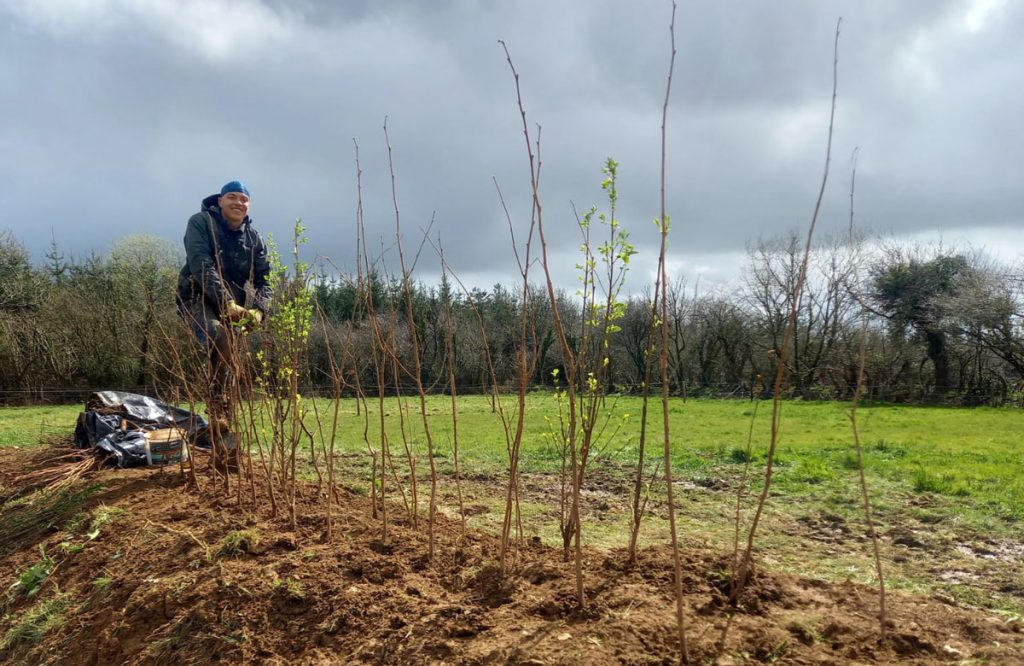
Replanting with broadleaf saplings
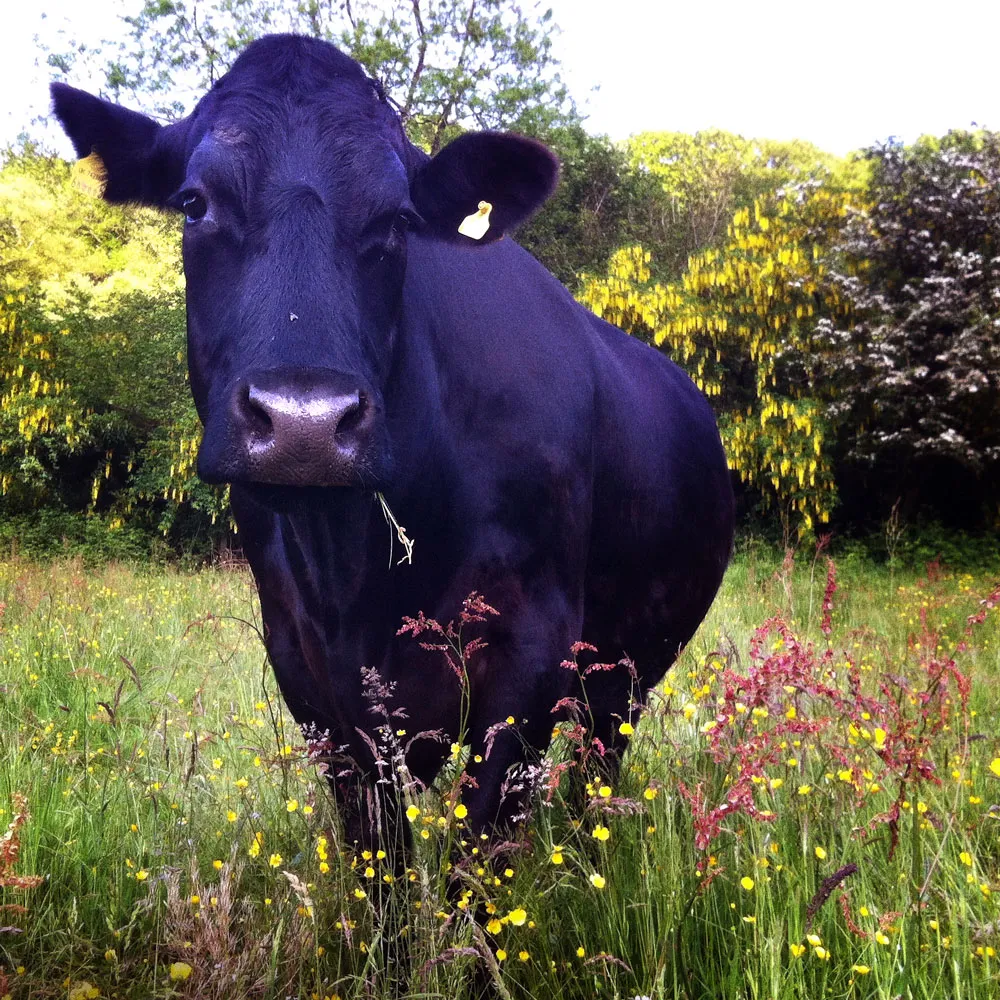
Meadow grazing
Looking forward
What we’re building is a smart local energy system, managed by Home Assistant, so that power goes to the right place at the right time. There’s more to do.
Battery Storage
Our wind turbine and solar panels already generate far more electricity than we use, but renewable generation is variable—the wind doesn’t always blow when we need power, and sometimes it blows when we don’t.
A battery storage system will solve this by capturing surplus energy as it’s generated and releasing it when demand picks up, smoothing out the peaks and gaps. It will also allow us to run in ‘island mode’—completely independent of the grid—while continuing to export surplus at times of high generation, when it’s most valuable to the wider network.
In time, we also plan to export electricity directly to Skanda Vale Hospice, nine miles away, which we currently supply with wood biomass for heating.
All-Electric Kitchen
We still use LPG to cook for our community and visitors. We plan to build a new fully electric kitchen as soon as possible, removing our last dependence on fossil fuels.
Pilgrim Accommodation
We currently have accommodation for around 50 pilgrims on site, heated by gas. We have planning permission to increase the beds, and the new accommodation will be built using straw bale or natural eco materials—the same approach that has worked well in our existing buildings.
A ground source heat pump will replace the gas system entirely, providing renewable heating and hot water for both the existing and new accommodation.
Ground source heat pumps work by drawing stable warmth from below the earth’s surface, making them highly efficient even in winter—and in our case, powered by the electricity from our own turbine.
1% for the planet
1% for the Planet is a global network that connects businesses committed to giving at least 1% of their annual sales to organisations doing real environmental work.
As an approved environmental partner, Skanda Vale can receive support from businesses across that network. If you run a business and would like to support what we’re doing here, you can find our profile on their website.
